
Searching Cass County Civil Dockets
Minnesota Court Records Online (MCRO) is the remote route into a Cass County civil case. Pick Civil as the category. Pick Cass as the court location. From there you can search in several ways. Use a person or business name, a complete case number, a citation number when one applies, or an attorney. Case Details may include Case Information, parties and their lawyers, events, hearings, a disposition, public documents, judgments, and financial fields. Still check the result itself. Confirm the case number, venue, filed date, title, and party roles before relying on it. When you already hold a full case number and want a public filing, turn to Document Search. Hearing Search covers upcoming settings, with case number, name, judicial officer, attorney, date, category, and Cass County as filter options. The daily Cass calendar is only a PDF. It has no search fields, so treat it as a quick check beside Hearing Search. For formal or older records, the courthouse public terminal, the counter, and the mail copy route through Cass County Court Administration remain the reliable fallbacks.
- Open MCRO Case Search and choose the Civil category and Cass County location.
- Search a complete case number when possible, or enter a carefully narrowed person or business name.
- Open View Case Details and confirm the civil type, filing date, venue, status, parties, and case number.
- Read events, hearings, and available documents in order; use Document Search for a known file.
- Check the calendar for a current setting, then use the terminal or Court Administration for a missing, older, or certified record.
Note: An online civil docket is an unofficial public view. Save the case number and retrieval date with any result you keep.
Cass County Civil Docket Search Fields
MCRO splits its tools. There is a general case search plus separate document, hearing, and judgment searches. A name search offers Person or Business. It takes last and first name, an optional middle name, and optional date-of-birth or filed-date narrowing. Enter a complete case number with or without dashes or leading zeros, but never with spaces. Use the Civil filter to narrow results. The Cass selector keeps a statewide result from masquerading as a Cass County civil docket.
| Civil research task | MCRO input | Public output to read |
|---|---|---|
| Caption search | Person or Business, Cass, Civil, optional filed date | Number, title, type, venue, status, and case link |
| Known case | Complete case number | Case details and available documents |
| Hearing | Number, name, officer, or attorney plus date | Hearing type, date, and case-details link |
| Money judgment | Debtor name, date/status, Cass | Judgment details and satisfaction data where available |
Results cap at 200 and can sort newest first or oldest first. Exact names and case numbers cut down false matches. When a business or party name floods the screen, the category, court location, and filed-date fields do more good than guessing at a case status you cannot verify.
Inside a Cass County Civil Docket
The civil Register of Actions records court activity; it does not replace the full case file. It may show a lot. Expect the result card, Case Information, party roles, attorneys, related cases, event and document-index entries, hearings, the civil disposition, judgments, and financial fields. A public document link sometimes sits beside an event. Remote availability still depends on the document, the case type, its date, and Rule 8 restrictions. A public event may have no document online. In that case, the courthouse terminal and Court Administration fill the gap.
| Case number and type | The court identifier and civil classification. Cass examples include 11-CV-26-...; only the complete number is a valid MCRO lookup key. |
|---|---|
| Parties and counsel | Plaintiff or petitioner, defendant or respondent, intervenor, and attorney roles where displayed. |
| Pleadings and events | Complaint or petition, service, answer, motions, notices, orders, and document-index activity. |
| Hearings | Scheduling, motion, trial, conciliation, or other settings that must be checked against the current notice. |
| Outcome layer | Judgment, dismissal, settlement, default judgment, satisfaction, writ, garnishment, appeal, or another stated event. |
A motion is a request, not a ruling. A notice of hearing is a setting, not an order. Before concluding anything about the civil case, read the event description and any signed order or judgment.
Cass County Civil Docket Filing Timing
A civil action can start with service before anything reaches the court. The Minnesota Judicial Branch explains that the first served summons and complaint may carry no court file number yet. It also notes that civil actions generally must be filed within one year after service, subject to stated exceptions. That gap matters. A party holding a served paper may find no matching Cass County civil docket in MCRO simply because nothing has been filed, and that says nothing about the status or merits of the matter. Some self-represented users qualify. They can use Minnesota Guide & File interviews for certain conciliation, divorce, eviction, and affidavit-of-service matters. Minnesota eFile and eServe runs statewide. Paper filing or mailing still works where mandatory e-filing rules do not apply. Fees attach either way, and Guide & File electronic filing can add a $5 fee. Remember these are filing routes, not docket-search tools. If the record seems missing, keep the served document. Ask the court office about process rather than assuming a filed Cass civil case exists. A full case number changes that. Once assigned, it unlocks the most precise MCRO, Document Search, and copy-request path.
Civil Case Types on the Docket
Cass County District Court civil dockets span major and minor civil cases, contract, tort, consumer-credit, personal-injury, unlawful-detainer or eviction, conciliation, and other civil categories. Family, probate, and mental-health cases carry their own MCRO distinctions, even though one unified Court Administration office handles them all. The case type controls both what shows remotely and how to read the record.
- Major and minor civil lawsuits, including contract and tort matters.
- Conciliation Court small-claims matters within the District Court.
- Unlawful detainer or eviction cases, which are civil case types for remote-access purposes.
- Family and probate matters, which use related but more limited remote-access rules in some circumstances.
- Post-judgment activity such as satisfaction, writ, garnishment, or appeal events.
Cass has no separate county, justice, or municipal civil court in the official structure. A hunt for a stand-alone civil clerk or separate small-claims docket wastes time. Cass County Court Administration is the stable local office for the District Court file.
Cass County Civil Docket Conciliation Records
Conciliation Court handles small claims in Minnesota. It sits inside District Court rather than standing as its own Cass County lower court. The Judicial Branch caps general claims at $20,000 and consumer-credit claims at $4,000. Filing the first conciliation claim in Cass costs $75. That breaks down into a $65 base fee plus a $10 law-library fee. The resulting case record still lives within the Cass District Court and MCRO access structure. A conciliation case may appear on the Cass calendar as a Conciliation Hearing setting. Start with a civil-category search scoped to Cass County, then open Case Details to confirm the case type and hearing information. A dollar amount that fits the limit proves very little by itself. It does not confirm a filing, a decision, or any visible event. Instead, those answers come from the actual case history and from any available documents. Need a formal record? Ask Court Administration for the specific docket, judgment, order, or other instrument. An MCRO result identifies the file. Only the clerk can produce a certified copy of it.
Civil Docket Settings and Hearings
The Cass daily calendar carries labels. You might see Motion Hearing, Scheduling Conference, Summary Judgment, Jury Trial, Conciliation Hearing, Rent Escrow Hearing, Harassment Hearing, Probate Hearing, or Account Hearing. A label is just the plan. It says what proceeding is scheduled, not what the judge decided. A Summary Judgment entry, for instance, marks a hearing. The written order that follows is the result worth reading. A Jury Trial setting is not a verdict either. Check a civil date against several sources. Use the notice, MCRO Hearing Search, the newest Cass PDF calendar, and the Register of Actions. The PDF posts on business days at 7:00 a.m. and updates hourly. Still, the printed calendars outside courtrooms and in public lobbies run most current. Confidential and Rule 8 nonremote matters may not appear in the PDF at all. When online sources disagree, call Court Administration instead of trusting a stale copy. The Cass County court dates page walks through the current-setting workflow in more detail. For any single setting, take notes. Jot down the date, time, hearing type, location, connection type, judicial officer, case number, and retrieval time.
Cass County Civil Docket Judgment Events
After a judgment, read the docket in reverse order. Start from the pleadings that opened the case. Find the judgment or disposition event first. Then trace whatever follows it: satisfaction, writ, garnishment, appeal, or another enforcement event. Judgment Search can surface a docketed money judgment along with any recorded satisfaction information. A judgment on the docket does not mean anyone paid. It means payment only if the public record carries a satisfaction or financial entry.
Civil docket terms demand careful limits. A filed complaint or petition starts a court event. But it proves no claim. An entry for service or an answer shows pleading activity, not a judgment. A motion or notice of setting is a request or a scheduled proceeding. It is never a ruling. A dismissal, settlement, default judgment, or agreed judgment names a disposition category. Yet the event and its document set the scope. Cass has not published official abbreviation meanings. The full event text is the safer source.
Turn to the separate Cass County case lookup route instead. Use it when a known case number or a narrowed caption is the missing piece. It points back to the specific public court file. It does not replace a copy request for a formal instrument.
Civil Docket Access Rules
Public access to Cass County court records runs through Minnesota Rules of Public Access Rule 8. No county data-request shortcut replaces it. Rule 8 separates inspection of original records from remote electronic access. Major and minor civil, conciliation, and unlawful-detainer categories enjoy fairly broad remote availability for listed public material. That includes many documents filed on or after July 1, 2015. Even so, limits apply. A given document can stay restricted, sit outside remote access, or predate the online coverage window entirely.
Cass civil access points:
Minnesota Rule 8 controls the court’s original-record and remote-access rules.
Minn. Stat. § 13.01 sets the state public-data presumption while recognizing the judiciary’s special regime.
Minn. Stat. § 13.03 describes requests for county administrative data held by the responsible authority.
Minnesota Statutes section 13.01 explains the public-data baseline and judiciary distinction.
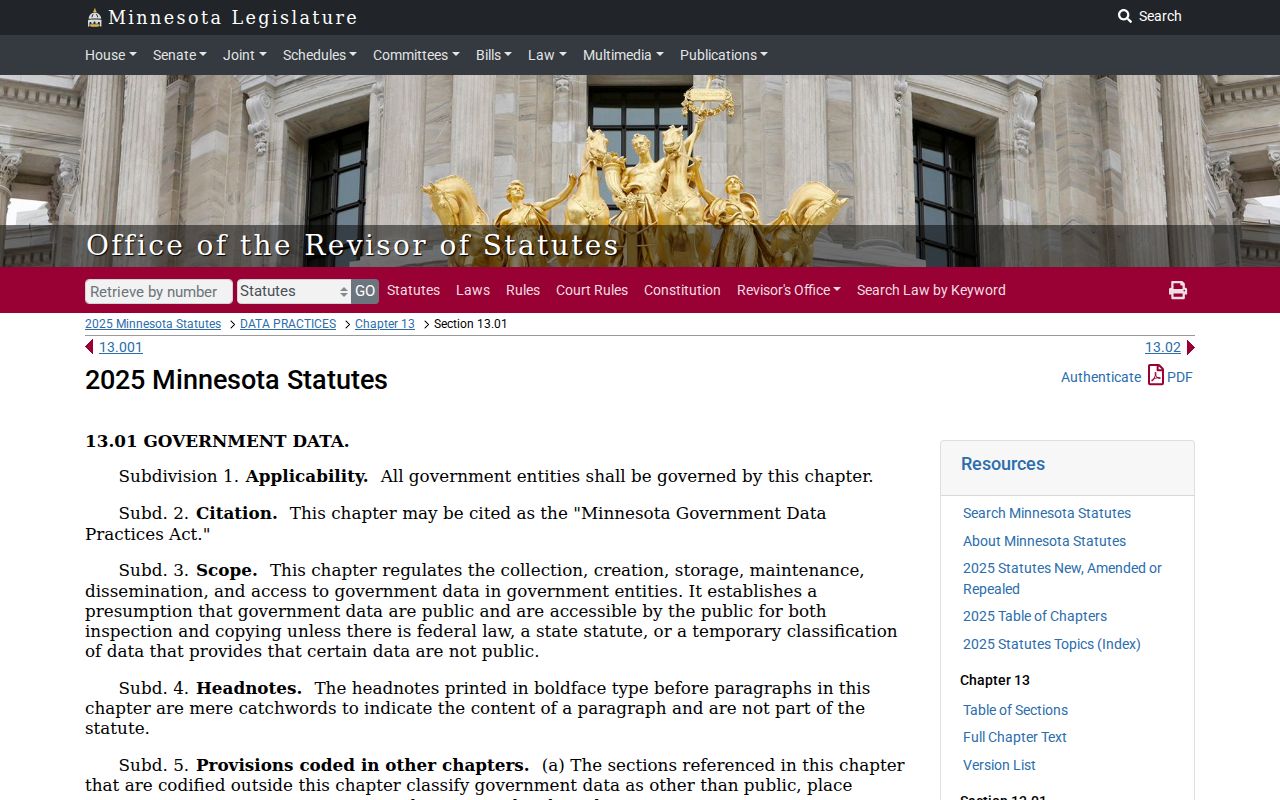
That statute serves county administrative records well, but it cannot override a court restriction or seal.
Minnesota Statutes section 13.03 sets out the public-data request procedure that responsible county authorities follow.
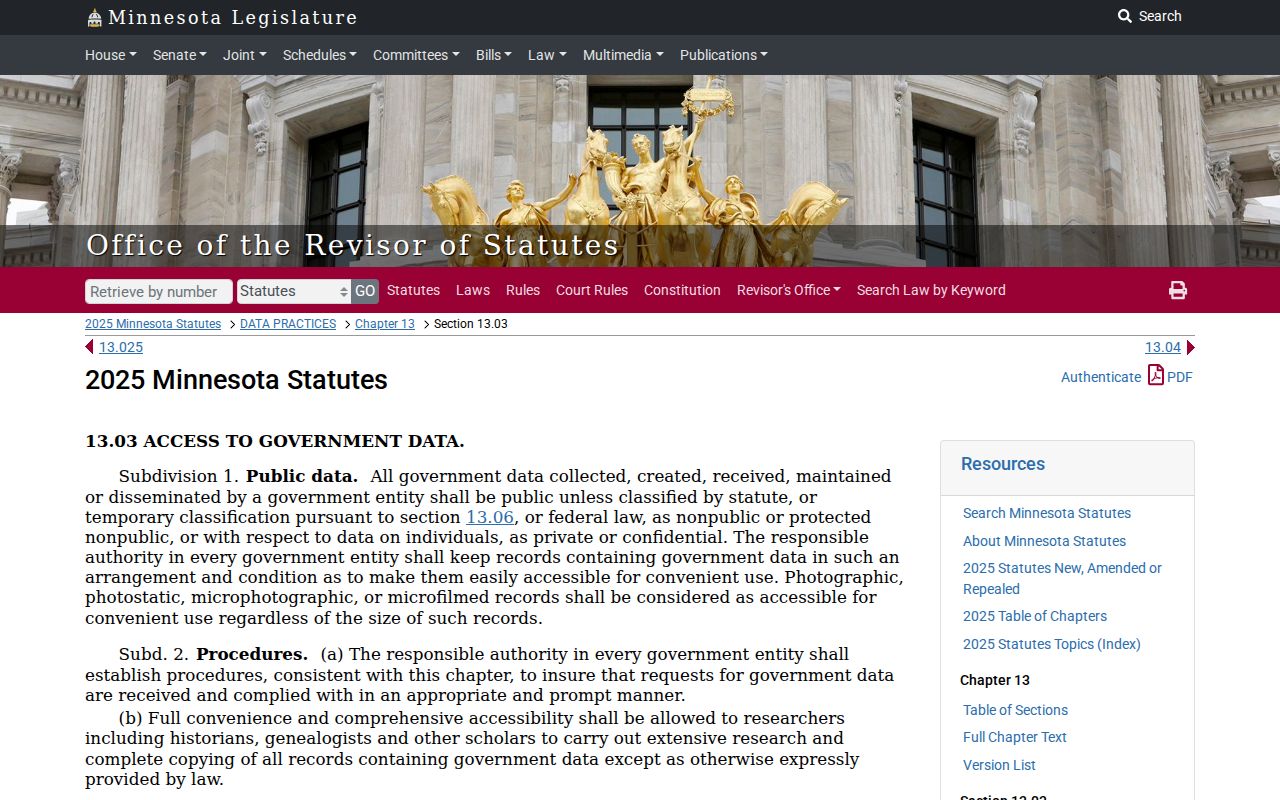
For the District Court file and its court-record access process, Cass Court Administration remains the right contact.
Cass County Civil Docket File Access
A public civil docket sometimes comes up short online. Work a layered fallback. First, run the complete case number without spaces through whichever of Case, Document, Hearing, or Judgment Search fits. Next, try the Cass public-access terminal. The Judicial Branch calls it the most complete electronic district-court view. Then ask Court Administration about a locally stored paper file, an older record, or the correct copy route. A mailed request should name the case and the exact item. Include the copy type, a delivery address, and payment when required.
Cass Court Administration lists plain copies, printouts, scans, and screen prints at $0. Certified copies cost $14. That covers an instrument, imaged or e-filed document, or screen print. An exemplified-and-certified copy runs $28. Restricted, sealed, adoption, juvenile, commitment, and some family material each need their own access authority. A public case title or event alone never opens the whole file.
Cass County Court Administration
Second floor, 303 Minnesota Avenue W, Walker, MN 56484
Mail: PO Box 3000, Walker, MN 56484
218-888-5150
Monday-Friday, 8:00 a.m.-4:30 p.m.
Note: Court staff can explain access and copy routes, but they cannot offer a legal opinion on a civil claim or strategy.
Cass County Civil Docket Court Boundaries
A Cass County civil docket belongs to Minnesota District Court. Federal cases live in a different system entirely. That means MCRO, the Cass daily calendar, and Cass Court Administration will not surface them. Check the court name and case-number format first. Otherwise you may chase a state civil docket in the wrong place. Keeping the two systems straight matters. A federal contact page is not a source for a Cass County civil case. The U.S. Attorney's Office for the District of Minnesota contact page shows who handles federal matters on that side of the line.
State civil matters come back to familiar tools. Use MCRO, the Cass calendar, the public terminal, or Court Administration for a Cass civil docket. An appeal from a Cass District Court order follows its own appellate path through the Minnesota Court of Appeals or the Minnesota Supreme Court.